Ingredients: Understanding Labels
When it comes to food labels, it can be confusing to know what information is really important, and what is really just marketing jargon. Here we explain what to look for, and the quality that we expect when looking at this information.
We’ll start with the info that you can ignore. These and other similar terms hold no value in truly determining the quality of the food, but are used to create the idea of healthful, natural foods. You must read deeper into the label to determine that.
- "Natural"
- "Healthy"
- "Premium"
- "Science-based"
Instead, we go straight to three sources: certification seals, the guaranteed analysis and the ingredients.
Certification Seals by Third Parties
Just as our food can have seals indicating approval of specific standards, pet foods can have some of the same standards and some pet food-only certifications. Some companies may utilize these practices, however they may not be certified, so it’s good to continue your research if looking for specifics. Certifications are voluntary. Here are common ones that you’ll see in our stores:

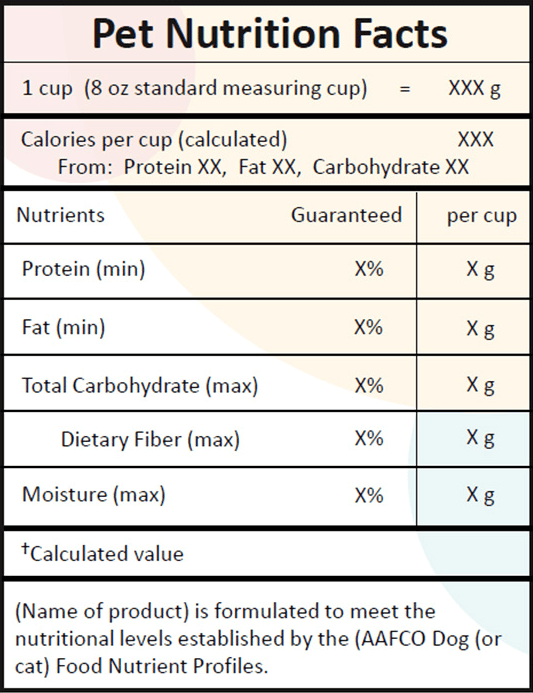
Guaranteed Analysis Chart
All pet food must display their Guaranteed Analysis chart, which is a nutrition chart showing the breakdown of the amount of macronutrients; the fats, proteins, and carbohydrates, the moisture content, and perhaps other nutrients in the food.
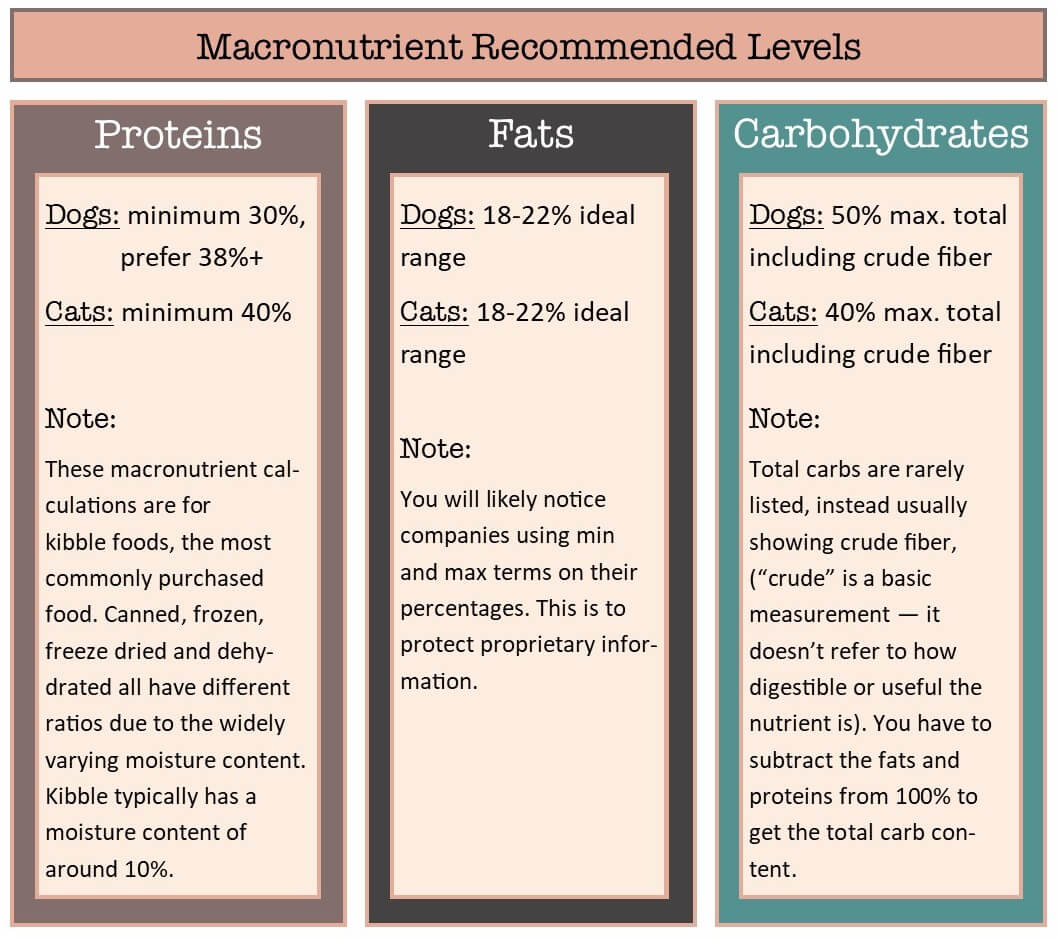
The macronutrients are the three energy sources, (you can also think of them as the calorie sources. The calorie is a unit of measurement of that energy) of the food your pet is consuming. Our recommendations, and our standard for any food that we sell are:
In What Order Are The Ingredients Listed?
Ingredients are listed in order by their weight. Items listed first have the most weight. For a food to be considered a "meat-based diet", the meats must be listed first on the ingredient list. For example, consider: "Turkey, Chicken, Chicken Meal, Barley, and Oatmeal". In this example, "Chicken" would be listed before "Chicken Meal" as the only difference between the two is that "Chicken" refers to the type of chicken you'd buy at the grocery store and "Chicken Meal" is simply dehydrated chicken where the water has been removed. "Chicken" would weigh more than "Chicken Meal", so it is listed first.
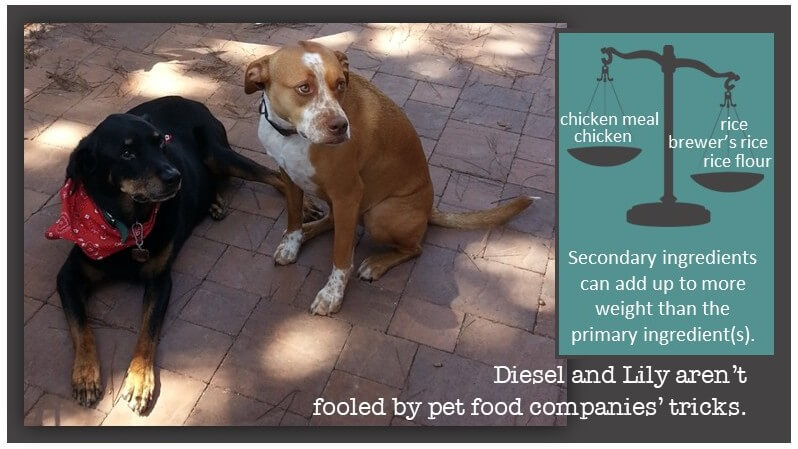
The meat should always be listed first. In fact, the first 3 ingredients should be meats, unless it is a single source protein diet. In that case, you may only see one type of meat listed, perhaps in both hydrated ("Chicken") and dehydrated ("Chicken Meal") forms. The other exception is when the food is considered a limited ingredient diet.
Be cognizant of the ingredients listed after the meat/s. If several forms of grains or carbohydrates are listed, that can diminish the overall percentage of meat. For example: "Rice, Rice Flour, and Brewer's Rice". In this example, the overall weight of the rice, since those are all technically "rice", may be more than the meat, thus decreasing the nutritional value of the food. Pet food companies frequently break the grains down to make them appear to be only secondary ingredients, when in reality, they are the primary component of the food.
Items listed farther down the ingredient list are a small percentage of the whole package. Vitamins and minerals only account for 1% of the total weight. With the exception of pre-biotics and pro-biotics, which are fiber and micro-organisms intended to aid in digestion, anything after the vitamins and minerals is insignificant.
Learn more about ingredients in our pets' food here .
